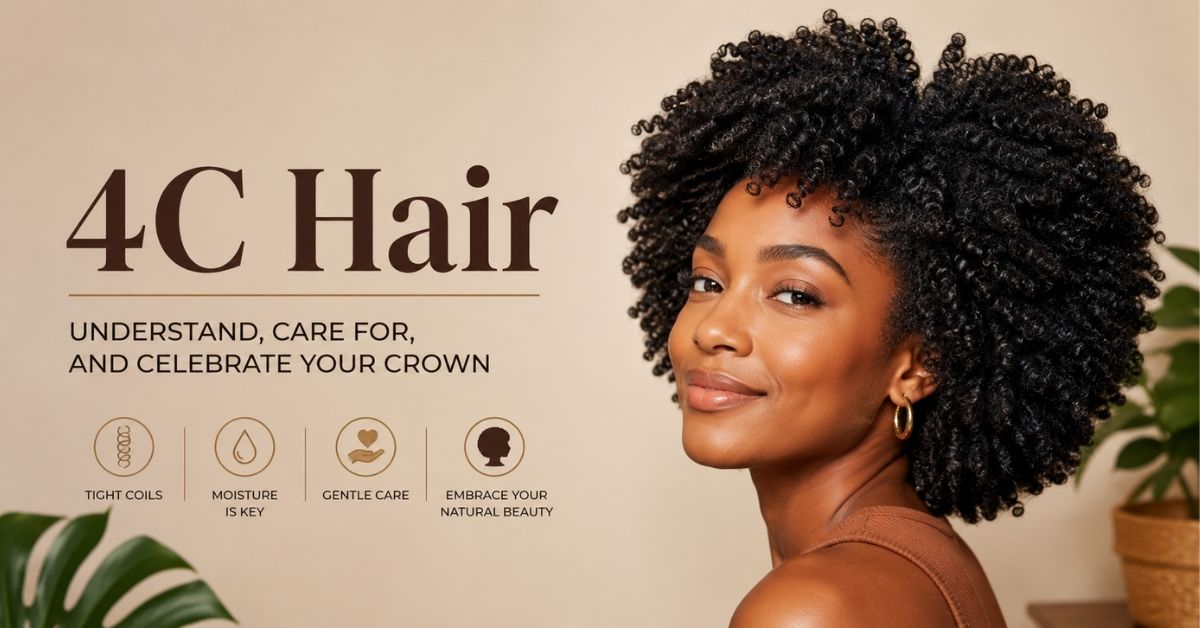
4C Hair Care: The Complete Guide to Healthy, Strong Curls
If you have type 4 hair, you already know it has a mind of its own. Your coils shrink up. They tangle fast. And finding products that actually work can feel like a guessing game. But here’s the truth: 4C hair is not hard to manage. It just needs the right knowledge and a little patience.
This guide breaks down everything about 4C hair care. You’ll learn what makes this hair type unique, how to build a wash routine, and how to grow longer, healthy curls. Let’s get started.
What Is 4C Hair?
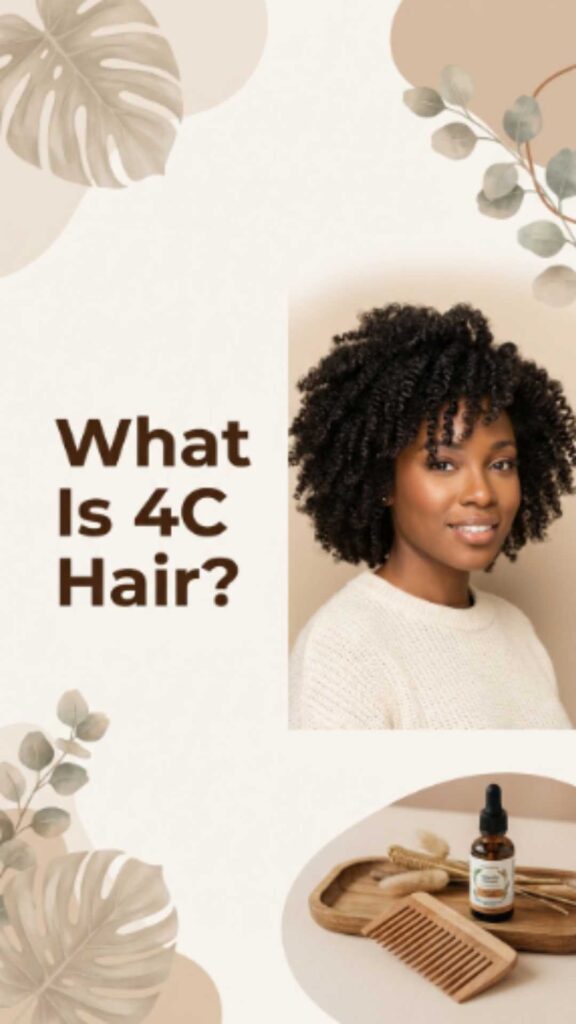
4C hair sits at the tightest end of the hair typing chart. It has a zig-zag curl pattern with very little visible curl definition in its natural state. This coily hair type is known for its dense, springy texture and dramatic shrinkage.
Compared to looser curl patterns, 4C hair needs more moisture and gentler handling. It’s beautiful and versatile. But it’s also one of the most fragile natural hair types out there. Understanding its structure is the first step toward better care.
What Makes 4C Hair Unique?
4C hair strands are thin, but they grow close together. This creates dense curls with a soft, cloud-like look. Unlike type 3 curls, 4C hair doesn’t form a clear “S” shape. Instead, the curl pattern bends sharply, almost like a zig-zag.
This shape affects everything. It affects how the hair feels, how it tangles, and how much it shrinks. Tightly coiled hair like this also makes natural oils travel slower from the scalp to the ends. That’s why dryness shows up so often with this hair texture.
4C Hair vs. Other Curl Types
People often confuse 4C hair with 4B hair or even 4A hair. Here’s a simple way to tell them apart.
| Hair Type | Curl Shape | Definition | Shrinkage |
| 4A hair | Defined “S” coil | High | Moderate |
| 4B hair | Z-shaped bend | Low | High |
| 4C hair | Zig-zag, tight curls | Very low | Very high (up to 75%) |
4A hair tends to hold a clear curl shape. 4B hair looks similar to 4C but is usually less dense. 4C hair has the tightest tight curls of all, with the least natural definition.
Common Characteristics of Type 4C Hair
Most people with 4C hair share a few traits. The strands are fine, but the hair feels thick overall because of how dense it grows. Curl shrinkage is intense. Ten inches of hair can look like three inches when dry.
This hair type also tangles easily. Tangled hair and single strand knots are common complaints. On top of that, 4C hair is naturally drier than looser curl types. None of this means something is wrong with your hair. It just means your curl maintenance needs to match your hair’s nature.
Why 4C Hair Needs Special Care
4C hair isn’t fragile because it’s unhealthy. It’s fragile because of its shape. Every bend in the strand is a weak point. That makes fragile strands more likely to snap during brushing, combing, or even sleeping.
This is why generic hair advice often fails. What works for wavy hair or looser curly hair won’t always work here. 4C hair care has to focus on three things: moisture, gentleness, and protection.
Understanding Shrinkage
Shrinkage happens because of the tight curl pattern. As hair dries, the coils pull up and in. This is a sign of strong natural elasticity, not damage. In fact, hair that doesn’t shrink at all may be a warning sign of low elasticity.
Many naturals fight shrinkage with hair stretching methods. Things like no-heat stretching, braiding, or banding can help show true length without heat damage. But shrinkage itself isn’t the enemy. It’s just part of how 4C hair behaves.
Why 4C Hair Gets Dry Easily
Natural scalp oil, called sebum, has a hard time sliding down a tightly coiled strand. With type 4 hair, the path is full of twists and turns. So oil rarely makes it to the ends.
This causes constant dry hair and moisture loss. Low hair porosity can make this worse, since the hair cuticle stays closed and blocks moisture from getting in. Knowing your porosity helps you choose the right products for real curl hydration.
Preventing Breakage and Split Ends
Hair breakage usually comes from a mix of dryness and rough handling. Pulling a comb through dry coils, sleeping on cotton, or over-styling can all weaken strands over time.
The fix is simple, even if it takes discipline. Keep the hair moisturized. Handle it gently. And get regular trims to remove split ends before they travel up the hair shaft and cause more damage.
Read More About: Summer Business Casual Women: The Best Office Style Guide 2026
Know Your Hair Before Building a Routine
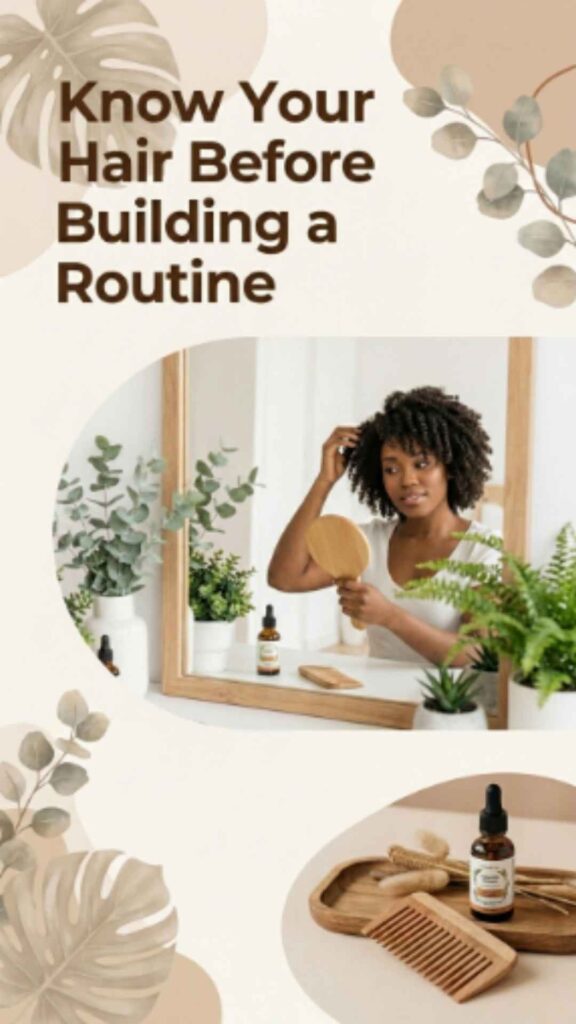
Before you build a growth routine, you need to understand your specific hair. Two people with 4C hair can still have very different needs. Hair porosity and hair density play a big role here.
Skipping this step is one reason routines fail. You might be using a heavy moisturizing cream on low-porosity hair that just sits on top and never absorbs. Or a light leave-in on high-porosity hair that dries out in an hour.
How to Determine Your Hair Porosity
A simple test can reveal your hair porosity. Drop a clean strand of hair into a glass of water. If it floats, you likely have low porosity. If it sinks fast, you likely have high porosity. If it floats in the middle, you’re somewhere in between.
Low porosity hair resists moisture but holds it once it’s in. High porosity hair absorbs moisture fast but loses it just as quickly. This single test can completely change how you approach hydration.
Understanding Hair Density
Hair density is about how much hair grows on your scalp, not how thick each strand is. To check it, part your hair and look at your scalp. If you see a lot of scalp, your density is low. If you barely see any, it’s high.
Density affects styling time and product amount. Dense hair usually needs to be styled wash in sections to make sure every part gets proper care, especially during scalp cleansing and conditioning.
Finding the Right Moisture-Protein Balance
4C hair needs both moisture and protein, but too much of either causes problems. Moisture overload makes hair feel mushy and weak. Too much protein makes hair feel stiff and brittle.
A good wash routine rotates between moisturizing shampoo, regular conditioner, and an occasional protein treatment. Pay attention to how your hair feels after each product. Your hair will tell you what it needs.
Step-by-Step 4C Hair Care Routine
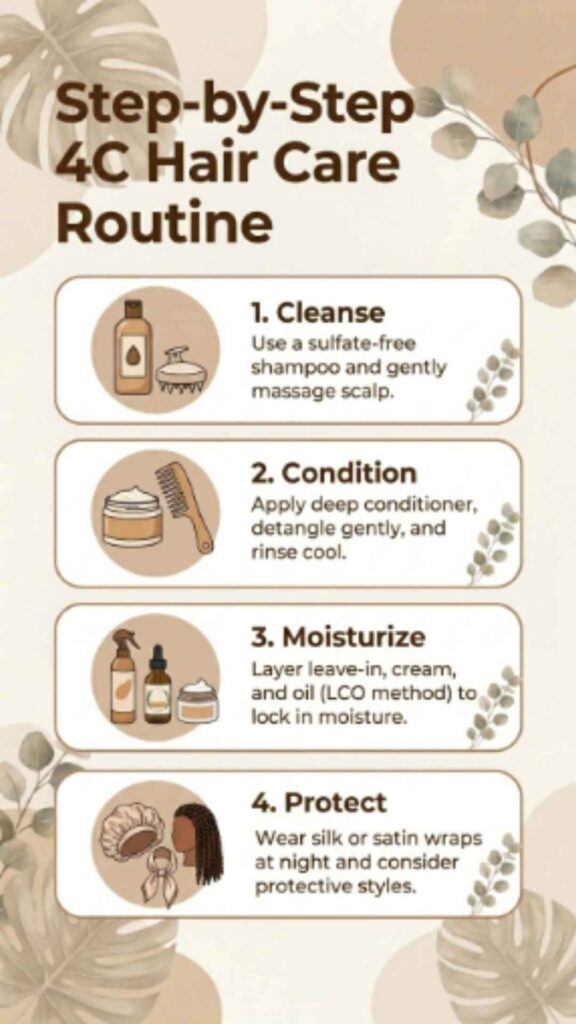
A solid 4C hair routine doesn’t have to be complicated. It just needs consistency. Below is a simple, repeatable process you can follow on every wash day.
This routine focuses on cleansing, conditioning, moisture, detangling, and protection. Each step builds on the last one. Skipping steps is usually where things go wrong.
Cleanse Your Hair Properly
Start with a sulfate-free shampoo or hydrating shampoo to avoid stripping natural oils. Use lukewarm water, since hot water can dry out the hair even more. Clarifying shampoo should only be used occasionally to remove product buildup.
Many naturals prefer to wash in sections to keep coils from tangling during cleansing. This also makes sure the scalp cleansing step is thorough, since a clean scalp supports better scalp health.
Deep Condition Every Week
A deep conditioner should be a weekly habit, not an occasional treat. Apply it generously, then cover your hair with a plastic cap. Heat helps the product penetrate deeper into each strand.
Leave the deep conditioning treatment on for 15 to 30 minutes. This step restores hair moisture, improves softness, and supports overall hair health over time.
Moisturize and Seal Your Hair
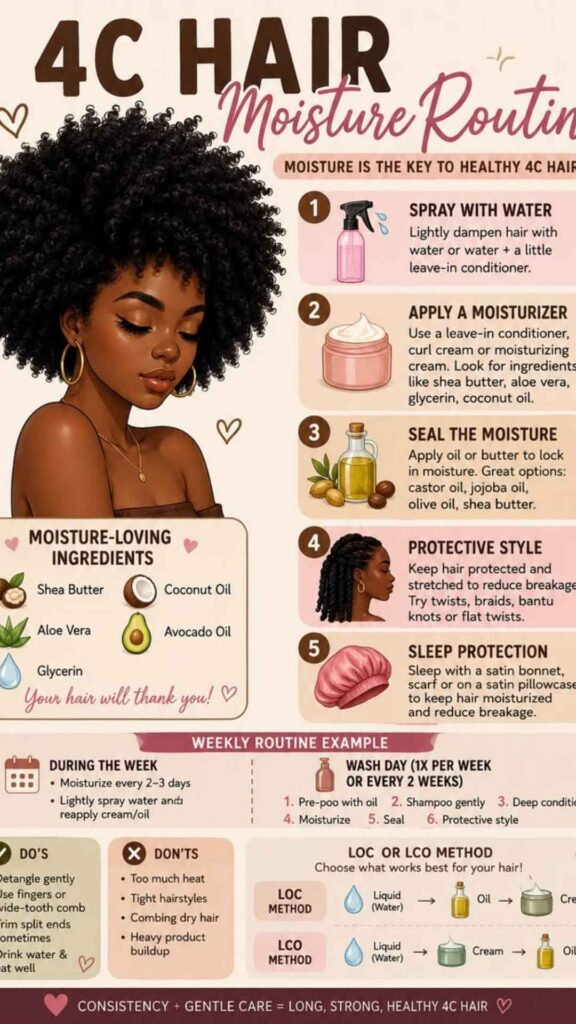
The LOC method and LCO method are popular ways to lock in moisture. LOC stands for liquid, oil, cream. LCO stands for liquid, cream, oil. Both work well for sealing moisture into the hair shaft.
Start with a water-based liquid or leave-in conditioner. Follow with natural oils like jojoba or castor oil. Finish with a curl cream to seal everything in and define your natural curls.
Detangle Without Causing Breakage
Detangling should always happen on wet or damp hair, ideally with a conditioner with slip applied first. Start with finger detangling to gently work through bigger knots before reaching for tools.
Once most knots are loose, use a wide-tooth comb to finish the job. Always work from ends to roots, never the other way. This protects against unnecessary hair breakage.
Protect Your Hair While Sleeping
Overnight hair protection matters more than people think. Cotton pillowcases absorb moisture from your hair while you sleep. A satin pillowcase or silk pillowcase prevents this.
Wrapping hair in a satin bonnet or silk scarf adds even more protection. This simple habit preserves your style longer and reduces friction-related breakage overnight.
Read More About: Women’s Business Casual: 25 Stylish Tips to Dress Professionally
10 Essential Tips to Care for 4C Hair
These ten tips reinforce everything covered so far. Think of them as daily and weekly habits that support your full 4C hair care routine.
Wash your hair regularly. Stick to a consistent wash routine, even if it’s just once or twice a month, to keep your scalp clean and balanced.
Keep your hair moisturized. Hair moisture should be refreshed daily with a light leave-in or water-based spray, especially on dry days.
Trim split ends frequently. Trimming hair every few months stops split ends from traveling further up the strand.
Use gentle, sulfate-free products. Harsh ingredients strip natural oils and worsen dry hair, so stick to gentle formulas.
Avoid excessive heat styling. Frequent heat use leads to heat damage that’s often permanent, so save it for special occasions only.
Minimize daily manipulation. Less touching means less breakage. Low manipulation styles give your hair a break from daily stress.
Protect your hair with satin or silk. This small switch makes a big difference for moisture retention overnight.
Massage your scalp regularly. A scalp massage boosts blood flow and supports a healthy scalp, which feeds stronger hair growth.
Prioritize length retention. Growth means nothing if ends keep breaking off. Focus on length retention just as much as growth itself.
Stay consistent with your routine. Results take months, not days. Stick with your curl routine even when progress feels slow.
How to Grow 4C Hair Faster
Everyone wants longer hair, and 4C hair can absolutely grow long and strong with the right approach. Hair growth depends on internal health just as much as external care.
It’s important to remember that hair growth happens at the scalp. What you eat, how you treat your scalp, and how well you protect your ends all play a role in the final result.
Eat a Nutrient-Rich, Protein-Focused Diet
Hair is made mostly of protein, so a diet low in protein intake can slow growth. Eggs, fish, beans, and lean meats all support stronger strands from the inside.
A balanced diet also reduces hair dryness and brittleness. Staying hydrated and eating whole foods gives your body what it needs to produce stronger hair.
Support Healthy Hair with Essential Vitamins
Hair vitamins like biotin, vitamin D, and zinc support healthy follicles. Iron deficiency is also linked to hair thinning, so it’s worth checking your levels if growth has stalled.
Talk to a doctor before starting any supplement. Whole foods are usually the safest and most effective source of these nutrients.
Stimulate Growth with Scalp Massages
A regular growth routine should include scalp massage. This increases blood circulation to hair follicles, which may support faster, healthier growth over time.
Use your fingertips, not your nails, to avoid scratching the scalp. A few minutes daily, paired with a light hair oil, makes this habit easy to stick with.
Try Green Tea or Herbal Rinses
Some naturals use green tea or rosemary rinses as part of their routine. These rinses are believed to support scalp health and may help reduce shedding, though results vary person to person.
To try this, brew a strong tea, let it cool, and pour it over clean hair as a final rinse. It’s a low-cost, low-risk addition to any routine.
Reduce Breakage for Better Length Retention
Here’s a fact many people miss: 4C hair often grows at a normal rate. The problem is reduce breakage isn’t happening fast enough to keep up with growth.
Focus less on speeding up growth and more on retain length. Gentle handling, low manipulation hairstyles, and consistent moisture do more for visible length than any product alone.
Protective Hairstyles for 4C Hair
Protective styling is one of the best tools for growing 4C hair. These styles tuck away the ends, which are the oldest and most fragile part of the hair, reducing daily wear and tear.
A good rule is to keep protective styles in for no longer than six to eight weeks. Leaving them too long can cause buildup, matting, or tension at the roots.
Twist Outs
Twist-outs create defined, stretched curls without heat. Two-strand twists are set on damp hair, left to dry, then unraveled for a soft, voluminous look.
Two-Strand Twists
Simple twist hair sets like two-strand twists work as both a styling method and a protective style. They can be worn for days or weeks at a time.
Box Braids
Box braids are a classic protective option. They last several weeks and require very little daily manipulation once installed.
Cornrows
Cornrows lie flat against the scalp and work well under wigs or on their own. They’re a low-cost, long-lasting option for busy schedules.
Bantu Knots
Bantu knots double as a style and a curling method. Once unraveled, they leave behind tight, defined coils similar to a braid-out.
Wigs and Crochet Styles
Wigs and crochet styles let you change your look while your natural hair rests underneath. They’re great for protecting length over long stretches of time.
Best Haircuts and Styles for 4C Hair
Not everyone wants long hair, and that’s perfectly fine. 4C hair looks stunning in short cuts too, and shorter styles often mean less daily maintenance.
The right cut depends on lifestyle, face shape, and personal preference. Talk to a stylist who has real experience with afro hair before committing to a big chop.
Tapered Cut
A tapered cut keeps length on top while trimming the sides shorter. It’s a stylish, low-maintenance option for those wanting shape without too much volume.
TWA (Teeny Weeny Afro)
A TWA is a popular post-big-chop style. It’s short, easy to manage, and a great way to start fresh with healthy, undamaged hair.
Rounded Afro
The classic rounded afro celebrates full volume and natural texture. It works beautifully on 4C hair thanks to its natural shrinkage and density.
Layered Natural Cut
Layering adds shape and movement to longer 4C hair. It can also reduce bulk for those with very dense, thick hair.
Read More About: 67 Best summer nail colors & Trending Designs for 2026
Best Products for 4C Hair
The right products make every step of your routine actually work. Look for ingredients that support curl hydration without weighing hair down or causing buildup.
Avoid products loaded with drying alcohols or heavy silicones that block moisture. Simpler ingredient lists are usually better for 4C hair.
Sulfate-Free Shampoo
A sulfate-free shampoo cleanses without stripping natural oils, keeping hair from drying out after every wash.
Moisturizing Conditioner
A rich, moisturizing shampoo pairing conditioner softens strands and makes detangling easier.
Deep Conditioning Mask
A weekly mask delivers intense hydration and repairs fragile strands damaged by manipulation or environmental stress.
Leave-In Conditioner
A leave-in conditioner is the foundation of the LOC method, providing the first layer of lasting moisture.
Curl Cream or Butter
Curl cream defines curl pattern and seals the cuticle, helping reduce frizz and improve curl definition.
Natural Oils for Sealing Moisture
Natural oils like castor, jojoba, and coconut oil help with sealing moisture, locking hydration in after each application.
Common 4C Hair Care Mistakes to Avoid
Even with good intentions, small mistakes can hold back progress. Recognizing these early can save months of frustration and unnecessary hair breakage.
Most of these mistakes come from habits borrowed from other hair types, or simply rushing through a routine without understanding what 4C hair actually needs.
Overwashing Your Hair
Over washing strips natural oils and worsens dry hair. Stick to a realistic wash routine based on your lifestyle and scalp needs.
Using Too Much Heat
Frequent heat styling leads to permanent heat damage. Save heat tools for rare occasions and always use a heat protectant.
Skipping Deep Conditioning
Skipping deep conditioning leaves hair under-moisturized and more prone to tangled hair and breakage.
Wearing Tight Protective Styles Too Long
Styles installed too tight can cause tension, thinning, and scalp damage. Always leave room for natural movement at the roots.
Ignoring Hair Porosity
Using the wrong products for your hair porosity wastes money and leaves hair either greasy or chronically dry.
Frequently Asked Questions
What does type 4C hair mean?
4C hair refers to the tightest curl pattern on the hair typing chart. It has a zig-zag curl pattern, very little curl definition, and high shrinkage.
What hair type is rarest?
There’s no official data confirming a “rarest” hair type, but very fine, low-density 4C hair is often considered less common than thicker, denser coils.
What is a 5C hair type?
5C isn’t an official category on the standard hair typing chart, though some people use it informally to describe extremely tight, wiry tight curls beyond typical 4C.
How do I define 4C hair?
You can boost curl definition using curl cream, the LOC method, and styles like twist-outs or braid-outs instead of relying on natural definition alone.
Conclusion
4C hair is strong, versatile, and full of personality once you understand how to care for it. The secret isn’t a miracle product. It’s consistent moisture, gentle handling, and patience with the process.
Start small. Pick one habit from this guide, whether it’s a weekly deep conditioning session or switching to a satin bonnet at night. Healthy, longer 4C hair isn’t a mystery. It’s simply the result of showing up for your natural hair day after day.