12 The Best Curly Hair Types Guide: Every Curl Pattern Explained
Curly hair is beautiful. But it can also feel like a puzzle. One day your curls look bouncy and full. The next day they turn into a frizzy cloud. If this sounds familiar, you are not alone. Millions of people struggle to understand their curly hair types. The good news? Once you know your curl pattern, everything gets easier.
This guide breaks down every curl type in simple terms. You will learn how to spot your pattern, what your hair actually needs, and which products work best. We will also cover hair porosity, hair elasticity, and the small daily habits that make a big difference. Let’s dive in.
What Are Curly Hair Types?

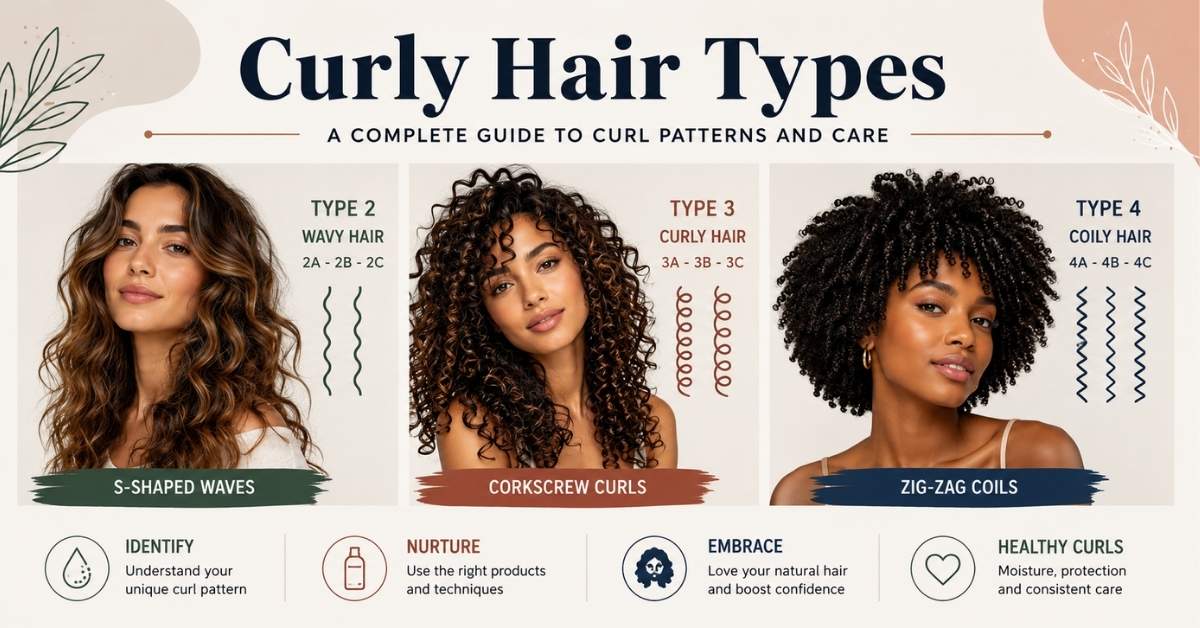
Curly hair types describe the natural shape of your hair strand. Hair can be straight, wavy, curly, or coily. Each type bends differently as it grows out of the scalp. The most common system uses numbers 2 through 4, with letters A, B, and C added to show curl size. This system was made popular by hairstylist Andre Walker in the 1990s, and it’s still the go-to method today.
The numbers describe the general shape. Type 2 means wavy hair. Type 3 means curly hair. Type 4 means coily hair. The letters after each number tell you how tight or loose that wave, curl, or coil is. A is the loosest. C is the tightest. It’s a simple idea, but it opens the door to understanding your curl texture in a much deeper way.
Think of this system as a language rather than a fixed label. Just like accents shift within the same spoken language, curl patterns shift within the same type. Two people can both be Type 3B hair, yet their strands can feel completely different in thickness, density, and how they respond to humid weather. That’s normal, and it’s actually one of the more interesting parts of natural hair. No two heads are exactly alike, even within the same category, and that’s part of what makes learning your own pattern worth the effort.
Why Knowing Your Curl Type Matters
Here’s the thing. Curly hair care is not one-size-fits-all. A product that works wonders on Type 2A hair could completely flop on Type 4C hair. Knowing your pattern helps you shop smarter, style faster, and waste less money on products that just don’t fit your hair’s needs.
There’s also a confidence piece to this. So many people spend years fighting their natural texture. They flat iron, they over-brush, they use products made for straight hair. Once you understand your natural hair, you stop fighting it. You start working with it. That shift alone can transform how you feel about your hair every single day.
Consider a quick example. Someone with Type 4B hair might spend years assuming their hair is just “hard to manage.” But once they learn their coils need heavier, cream-based products instead of watery lotions made for looser waves, everything changes. Curls start defining properly. Breakage slows down. What felt like a losing battle turns into a routine that actually works, simply because the products finally match the textured hair they’re meant for. This is the real value of learning your type. It’s not about fitting into a box. It’s about finally speaking your hair’s own language.
Read More About: Black Hair Color Guide (2026): Best Shades, How to Get It & Care Tips
How to Identify Your Curly Hair Type
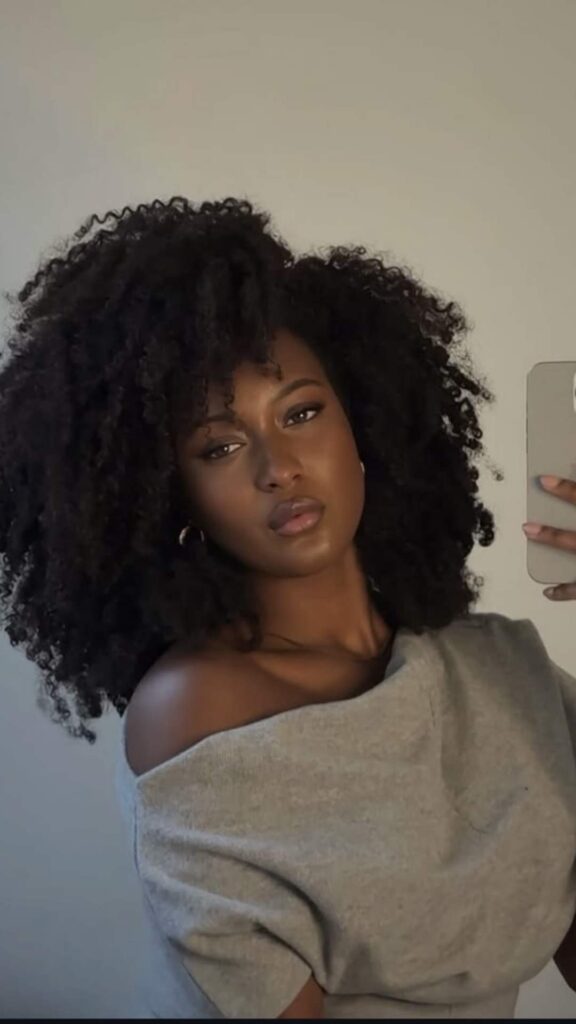
Figuring out your curl pattern doesn’t require a salon visit, though a stylist can help if you’re stuck. You can do a simple check at home. This section covers how to identify your curl type and how to know your hair type using two easy steps: understanding the chart, and testing your own strands.
The Curl Typing System Explained
The chart below breaks down each type and what it generally looks like. Keep in mind that many people have more than one pattern on their head, so don’t panic if you don’t fit neatly into one box.
| Type | Shape | Subcategory Meaning |
| Type 2 | Wavy, S-shaped waves | A = loose, B = medium, C = defined |
| Type 3 | Curly, springy loops | A = large curls, B = tighter loops, C = corkscrew curls |
| Type 4 | Coily, tight pattern | A = defined coils, B = zig-zag curls, C = tightest coil |
Curl diameter and curl density also play a role here. Diameter is how thick each individual strand is. Density is how many strands you have per square inch of scalp. Two people can both have Type 3 hair, yet one has thin, fine curls and the other has thick, dense ones. That’s why the chart is a starting point, not a strict rulebook.
How to Test Your Natural Curl Pattern
Wash your hair with no product at all. Let it air dry completely, without touching it. Then look closely at different sections, like your crown, your nape, and the sides. Take a photo for reference. This test shows your true, undisturbed curl pattern, since gels and creams can hide or stretch out your natural shape.
Don’t be surprised if your crown looks different from your nape. This is completely normal. Most heads have at least two curl types blended together, and that mix is part of what makes your hair uniquely yours.
Type 2 Wavy Hair
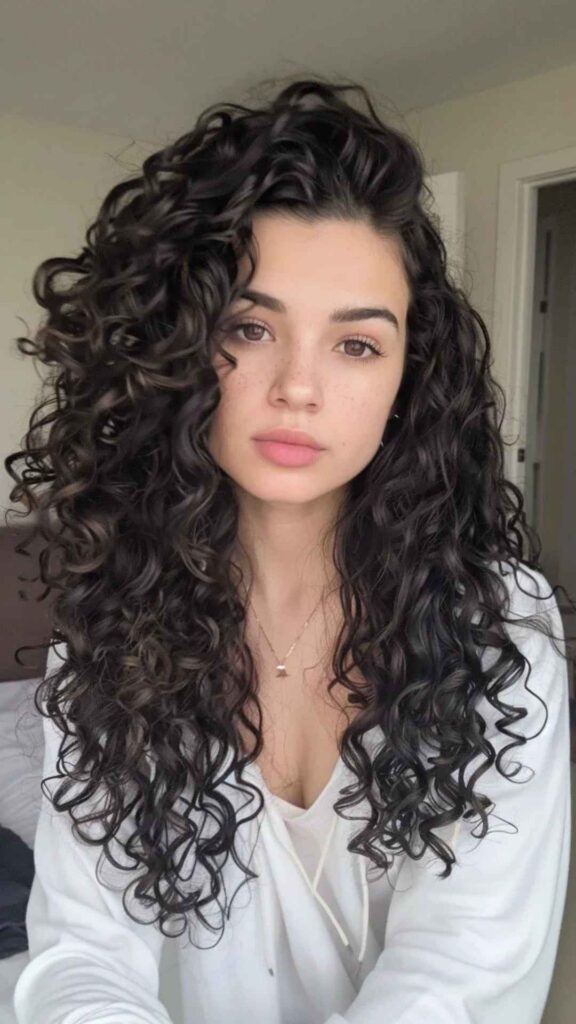
Wavy hair sits between straight and curly. It usually has a smooth hair cuticle, which gives it a natural shine. Waves form gentle S-shaped waves rather than tight loops, and this type tends to get oily faster than curlier textures because scalp oils travel down the strand more easily.
This texture is often described as low-maintenance, but that reputation isn’t always fair. Wavy hair can flatten easily if you use products that are too heavy, and it can frizz just as badly as curlier types in the wrong weather. The trick with wavy hair is balance. Too little product and the wave falls flat. Too much and it turns greasy or stiff. Finding that middle ground is really the whole game with this type.
Type 2A Hair
Type 2A hair is the loosest wave pattern. It’s often fine and can look almost straight at the roots, with soft bends near the ends. Light products work best here. A volumizing mousse or a light styling gel adds definition without weighing the hair down.
Type 2B Hair
Type 2B hair shows a more defined bend. It sits in the middle of the wavy family and tends toward more frizz than Type 2A, especially in humid weather. A lightweight curl cream paired with a mousse for curls usually gives the best hold.
Type 2C Hair
Type 2C hair is the most defined wave type, and it often borders on curly. Strands are usually thicker here, which means the hair holds more moisture but also frizzes more easily. Frizz control products, like a light gel scrunched through damp hair, work wonders for this pattern.
Read More About: 15 Stunning Honey Blonde Hair Ideas to Inspire Your Next Salon Visit
Type 3 Curly Hair
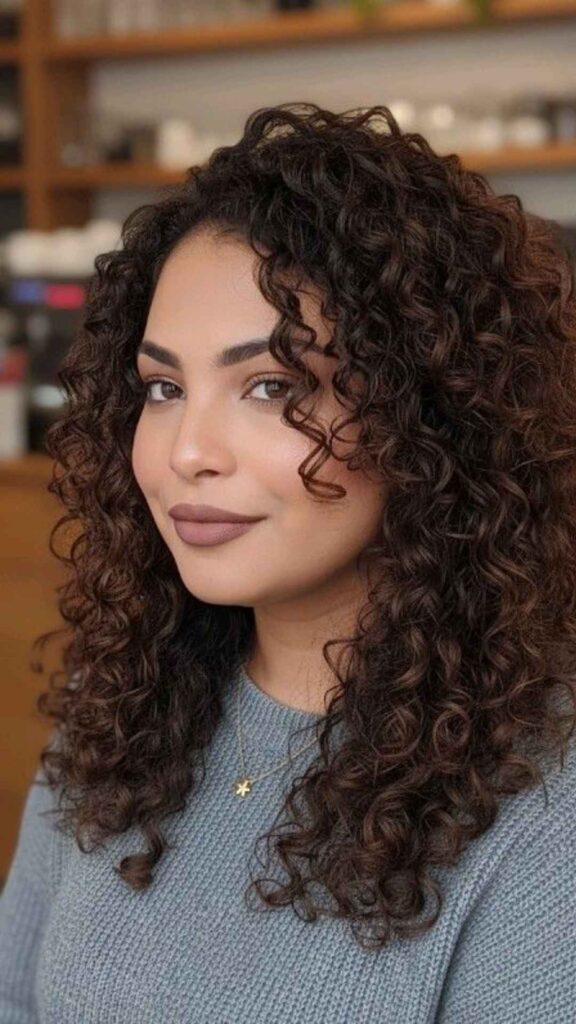
Curly hair in the Type 3 family forms real loops and springs back after you stretch it. This is where springy curls live. The hair shaft tends to be more textured than wavy hair, which means it holds curl shape well but also loses moisture faster.
People with Type 3 hair often describe a love-hate relationship with humidity. On a good day, moisture in the air can actually enhance curl definition, giving strands extra bounce and shine. On a bad day, that same humidity swells the hair cuticle and turns smooth ringlets into a frizzy halo. Learning to read your local weather, and adjusting your product routine accordingly, becomes second nature once you’ve lived with Type 3 curls for a while.
Type 3A Hair
Type 3A hair has large, loose curls, often described as looking like a piece of sidewalk chalk in size. It’s shiny and defines easily, but it can also fall flat with heavy products, so a light touch works best.
Type 3B Hair
Type 3B hair forms springy ringlets that are a bit tighter and smaller in circumference. This type usually has more volume and a bouncier look, and it benefits from a curl-defining cream applied to soaking wet hair.
Type 3C Hair
Type 3C hair is made up of tightly packed corkscrew curls. This texture shows the most curl shrinkage in the Type 3 group, meaning your hair looks much shorter dry than it actually is when stretched out. It needs richer, more hydrating products to stay defined.
Type 4 Coily Hair
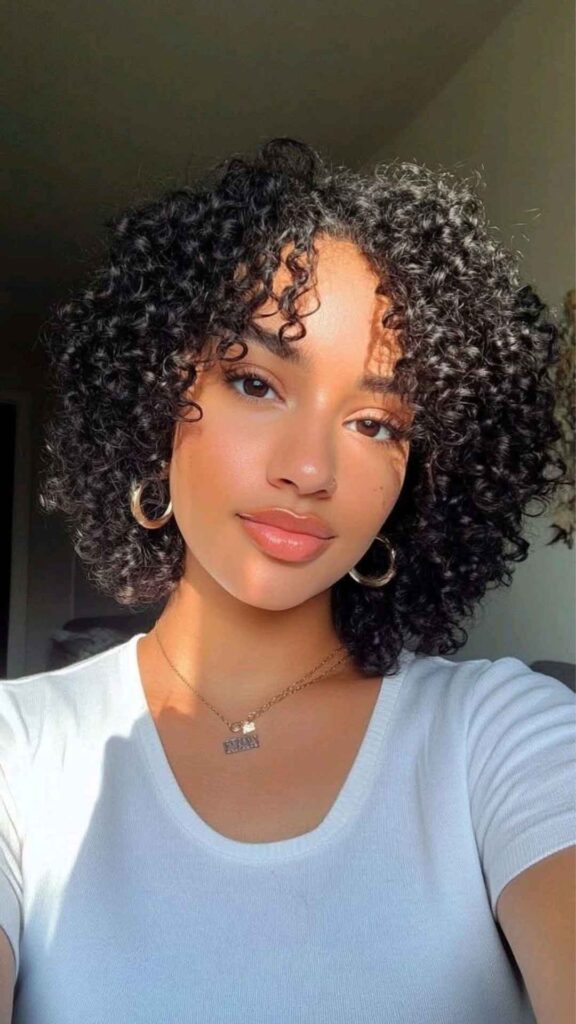
Coily hair is the most fragile and textured of all the curl types. It forms tight coils or a zig-zag curls pattern, and it shrinks more than any other type. Because the coil bends back on itself so many times, moisture has a harder time traveling down the strand, so this type needs the most curl hydration.
This texture also tends to have the highest curl density, meaning more strands packed into each square inch of scalp, even though individual strands can sometimes feel finer than expected. That combination of density and tight coiling is exactly why hair moisture matters so much here. Water and oil simply have a longer, bumpier road to travel down each strand, so daily moisture and gentle handling aren’t optional extras for this type. They’re the foundation of the entire routine.
Read More About: 10 Stunning Dusty Pink Hair Color Ideas You’ll Want to Try in 2026
Type 4A Hair
Type 4A hair has well-defined, springy coils, usually about the width of a crochet needle. It holds curl definition better than 4B or 4C, but it still needs daily moisture to avoid dryness.
Type 4B Hair
Type 4B hair has a looser, less defined zig-zag curls pattern. It’s more prone to shrinkage and dryness than 4A, so a heavier curl cream or butter-based product helps seal in moisture.
Type 4C Hair
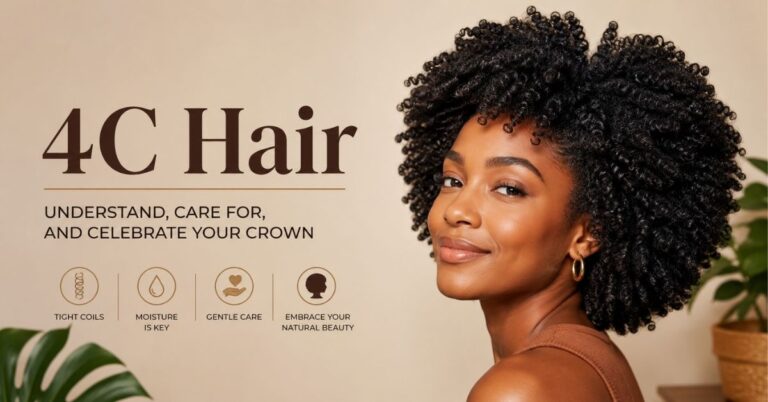
Type 4C hair has the tightest coil or zigzag shape of all curl types. It shows the highest shrinkage, sometimes shrinking up to 75% from its stretched length. This texture needs gentle handling, rich moisture, and protective styling to thrive.
Wavy vs Curly vs Coily Hair: What’s the Difference?
Since these three categories often get mixed up, here’s a side-by-side look to make things clearer. Each type has its own shrinkage level, porosity tendency, and general care needs.
| Feature | Wavy Hair | Curly Hair | Coily Hair |
| Shape | S-shaped waves | Springy loops | Tight coils or zig-zag |
| Shrinkage | Low | Moderate | High |
| Porosity tendency | Often low to medium | Medium | Medium to high |
| Main need | Light hydration | Balanced moisture | Deep, rich moisture |
People often use “curly” as a catch-all term for anything that isn’t straight. Technically though, curly refers only to Type 3. Wavy and coily are their own distinct categories, each with different hair moisture needs and different products that work best for them.
Understanding Hair Porosity and Curl Elasticity
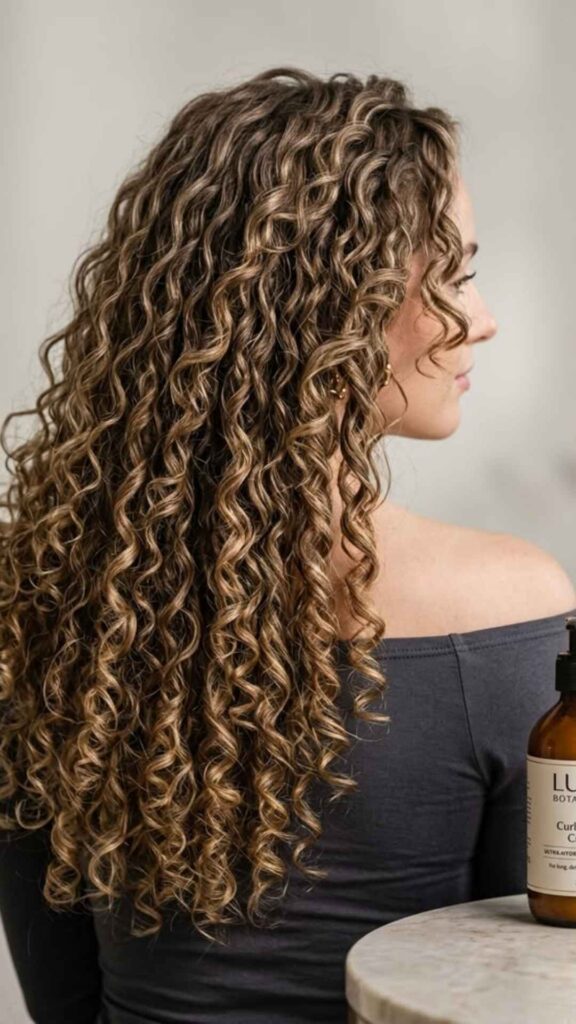
Curl type tells you the shape of your hair. Hair porosity and hair elasticity tell you how healthy that hair actually is. Both factors affect how your hair reacts to products, water, and styling, so understanding them is just as important as knowing your curl pattern.
What Is Hair Porosity?
Porosity is how well your hair absorbs and holds onto moisture. It comes down to how open or closed your hair cuticle is. Low porosity hair has a tightly closed cuticle, so water and products struggle to get in, but once moisture is in, it stays put. High porosity hair has a raised, more open cuticle, so moisture gets in and out fast, often leaving hair feeling dry. Medium porosity hair sits in the middle and usually holds moisture the best of all three.
A quick way to check your porosity is the float test. Drop a clean strand of hair into a glass of water. If it floats, you likely have low porosity. If it sinks fast, you likely have high porosity. If it floats in the middle for a while before sinking, you’re probably medium porosity.
Here’s a quick reference table to keep these three categories straight, since people often mix them up when shopping for products.
| Porosity Level | Cuticle Behavior | Product Needs |
| Low porosity hair | Tightly closed, resists moisture | Lightweight, water-based products, warmth helps products absorb |
| Medium porosity hair | Balanced, absorbs and holds moisture well | Standard routine works well, minimal adjustment needed |
| High porosity hair | Raised, loses moisture fast | Richer creams, sealing oils, protein treatments |
Knowing where you land on this chart saves a lot of guesswork at the store. It also explains why a friend’s holy-grail product might do absolutely nothing for your own hair, since porosity affects absorption just as much as curl type does.
Read More About: 20 Stunning Blue Hair Color Ideas to Transform Your Look in 2026
What Is Hair Elasticity?
Elasticity measures how much your hair stretches when wet, and how well it bounces back afterward. Good elasticity means your curls hold their shape and resist hair breakage during styling. Poor elasticity means hair snaps easily or loses its curl pattern quickly.
Try the stretch test to check yours. Take a wet strand and gently pull it. If it stretches and springs back, your elasticity is healthy. If it stretches and stays stretched, or snaps right away, your hair likely needs a protein moisture balance adjustment to get back to full strength.
Why Both Matter for Healthy Curls
Porosity and elasticity work together, and ignoring either one leads to picking the wrong products. If your hair is high porosity and low elasticity, a heavy protein treatment will help rebuild strength. If it’s low porosity, lighter, water-based products penetrate better than thick butters that just sit on top. Skipping this step is one of the biggest reasons people feel stuck with products that never seem to work.
How Often Should You Wash Your Curly Hair?
There’s no single right answer here, since it depends heavily on your curl type. As a general rule, curlier and coilier hair needs less frequent washing than wavy hair, because natural scalp oils take longer to travel down a tightly coiled strand.
Best Wash Routine for Wavy Hair
Wavy hair usually needs washing two to three times a week. Oils travel down the hair shaft quickly in this type, so it can look greasy faster than curlier textures. A sulfate-free shampoo keeps things clean without stripping natural moisture.
Best Wash Routine for Curly Hair
Curly hair does well with washing once or twice a week. A co-wash in between full shampoo days helps keep curls hydrated without over-cleansing. Weekly deep conditioning is a must for this texture to maintain curl definition.
Best Wash Routine for Coily Hair
Coily hair thrives with washing just once a week, sometimes even less. A cleansing conditioner works better than traditional shampoo most days, with a clarifying shampoo used only once a month to remove buildup.
Best Hair Care Routine for Every Curl Type
No matter your specific pattern, a solid wash day routine follows the same basic steps. The details shift slightly by type, but the framework stays the same across wavy, curly, and coily hair.
Shampoo Tips
Focus shampoo on your scalp, not your lengths. A sulfate-free shampoo cleanses gently without drying out your curls. Massage it into your scalp with your fingertips, and let the suds rinse down through the rest of your hair naturally.
Conditioning Tips
Apply conditioner generously and detangle while it’s still in your hair. Finger detangling or a wide-tooth comb works best, since brushing dry curls causes unnecessary breakage. Start from the ends and work your way up in small sections.
Deep Conditioning
Deep conditioning should happen at least once a week for curly and coily types, and once every two weeks for wavy hair. Choose a moisture-based mask most weeks, and swap in a protein treatment occasionally if your hair feels weak or stretchy.
Styling Products
Apply products to soaking wet hair for the best curl definition. A leave-in conditioner goes on first, followed by a curl cream or gel depending on your hold needs. Many people layer products together, a technique often called “cocktailing,” to get both moisture and hold.
Drying and Diffusing
Plopping with a t-shirt or microfiber towel reduces frizz while drying. Air drying curls works great when you have time, but a diffuser speeds things up on busier days. Always use a heat protectant spray before diffusing, since even low heat can cause damage over time.
Common Curly Hair Problems and Solutions
Every curl type runs into a few of the same issues at some point. Understanding the cause makes fixing the problem much simpler.
Frizz
Frizzy hair happens when the hair cuticle lifts up and lets in humidity from the air. Anti-humectant products help block moisture from the environment on humid days. Drying hair fully, rather than leaving it damp for hours, also cuts down on frizz significantly.
Dryness
Dryness comes from a lack of hair hydration, often due to porosity issues or harsh products. Deep conditioning weekly and sealing with a light oil afterward locks moisture in. Avoiding sulfate-free shampoo alternatives that still contain drying alcohols also helps a lot.
Breakage
Hair breakage usually points to low elasticity or rough handling. Gentle detangling, silk or satin accessories, and regular protein treatments all help strengthen strands. Overusing heat tools without protection is one of the most common causes of ongoing damage.
Loss of Curl Definition
If your curl definition fades fast, product buildup or over-washing might be the culprit. A monthly clarifying wash removes residue that weighs curls down. Re-wetting hair midweek with water and a bit of leave-in, sometimes called a curl refresh, brings shape back without a full wash.
Can You Have More Than One Curl Type?
Yes, and honestly, most people do. It’s completely normal to have Type 2C waves at the crown and Type 3A curls at the nape. Rather than picking one type and forcing your whole head into that box, it helps to treat different sections with slightly different amounts of product based on what each area actually needs.
Think of your head like a garden with a few different plants growing side by side. Each one needs slightly different care, even though they’re all part of the same landscape. Learning your own mix takes a little trial and error, but it pays off once you find your rhythm.
A simple way to manage mixed patterns is to apply your richest, most hydrating product to the tightest curl sections first, since those areas usually need the most moisture. Then move to lighter products for looser sections as you work around your head. This layered approach, sometimes called sectioning, prevents one part of your hair from getting overloaded with product while another part goes dry and undernourished.
Common Mistakes to Avoid When Caring for Curly Hair
A few habits quietly sabotage even the best routine. Brushing curls when they’re dry breaks the pattern apart and creates frizz instead of definition. Using products made for straight hair often weighs curls down or leaves them feeling greasy fast.
Skipping heat protection before diffusing causes slow, cumulative damage that shows up months later. Over-washing strips natural oils, while under-moisturizing leaves curls brittle and prone to snapping. Wearing tight hairstyles too often puts stress on the hairline and can lead to lasting damage if it becomes a daily habit.
Another overlooked mistake is skipping a satin pillowcase at night. Cotton pillowcases pull moisture out of hair and create friction, which leads to frizz and tangles by morning. Swapping in satin or silk, or wrapping hair before bed, protects your curl definition while you sleep and cuts down on the work you have to do the next day. It’s a small change, but it makes a noticeable difference over a few weeks of consistent use.
Best Hairstyles for Different Curl Types
Certain styles naturally suit certain textures better than others. Wash-and-go styles look fantastic on Type 3A and 3B hair, where curls already have strong natural definition. Twist-outs and braid-outs work beautifully across Type 4A through 4C hair, stretching the pattern gently while adding shape.
Protective hairstyles, like braids, twists, or buns, help Type 4 hair retain length and moisture over time. For wavy Type 2 hair, loose buns or half-up styles keep waves intact without much effort. Whatever style you choose, the pineapple hairstyle at night, gathering curls loosely on top of the head, helps preserve definition until your next wash day.
Seasonal changes also matter more than people expect. In colder months, protective styles help shield curls from dry indoor heat, which pulls moisture out of hair fast. In summer, looser styles let curls breathe and reduce the buildup of sweat and product near the scalp. Adjusting your go-to hairstyle by season, rather than sticking to one look year-round, keeps every curl type healthier over the long run.
Frequently Asked Questions
What is the rarest curly hair type?
Type 4C hair is often considered the rarest and most fragile pattern, since its tight zigzag shape makes it especially prone to shrinkage and breakage without careful moisture care.
Can curl type change over time?
Yes, hormones, aging, pregnancy, and even hair damage can shift your curl pattern over the years. Many people notice looser or tighter curls appearing at different life stages.
Can straight hair become curly?
In rare cases, changes in hormones or health can alter hair texture, but this isn’t common. Most of the time, hair that looks straight simply has undamaged waves that show themselves once properly cared for.
Which curl type is easiest to manage?
Type 2A wavy hair is generally considered the easiest to manage, thanks to its loose pattern and lower need for intensive moisture, though “easy” really depends on your personal routine and lifestyle.
Conclusion
Curl typing isn’t a strict rulebook. It’s a tool to help you understand your hair a little better. Whether you have Type 2A hair or Type 4C hair, or a mix of several patterns across your head, the goal stays the same: give your curls what they actually need, not what works for someone else’s texture.
Take the tests in this guide, get curious about your own strands, and build a routine around your real curl pattern rather than guessing. Your curls have been trying to tell you what they need all along. Now you finally know how to listen.